As Cyprus’ largest private maternity clinic dedicated entirely to the care of women and children, we understand the sensitivity in seeking treatment for one of the complexities of women’s health.
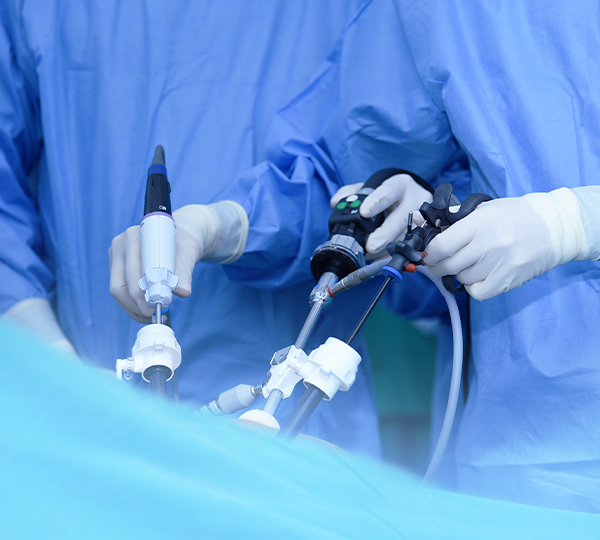
With advances in medicine, the majority of all gynecological procedures are now performed laparoscopically. Laparoscopic surgery is performed using an instrument called a laparoscope which allows your doctor to see and operate in the abdomen without having to make a large incision. Two or three smaller incisions are made along the sides of the abdomen to allow passage of highly specialized surgical instruments. Laparoscopic techniques require smaller incisions, which in turn reduces pain and shortens recovery time, as well as resulting in less post-operative scarring. This often translates to a shorter hospital stay and much less pain during the recovery process. In many cases, patients go home on the same day or the next morning.
Our team of experienced laparoscopic surgeons is here to answer all your questions, and to explain the range of benefits from a laparoscopic procedure. The Medical Centre has recently invested heavily in our laparoscopic unit, both in HD technology and state-of-the-art laparoscopic instruments.
Services which are offered include:
Laparoscopic Surgery
Laparoscopy can be used for diagnosis, treatment, or both and a diagnostic procedure can turn into an operative procedure when required. Unexplained pelvic pain, infertility and a history of pelvic infection are some of the conditions that could require diagnostic laparoscopy.
A hysteroscopy is a procedure during which the inside of the uterus (womb) is examined using a thin narrow type tube called a hysteroscope.
Diagnostic hysteroscopy: This is carried out to look for any abnormalities of the uterus and find the cause for any symptoms you may be experiencing.
Operative hysteroscopy: This is when a hysteroscopy involves an additional procedure, most commonly taking a biopsy (taking a small sample of tissue to be tested), or removing a polyp, fibroid or resection of a uterine diaphragm, etc.